
Eggplant Methodology
The Eggplant Methodology (Berinjela) was created to make training easier for professionals preparing for clinical practice.
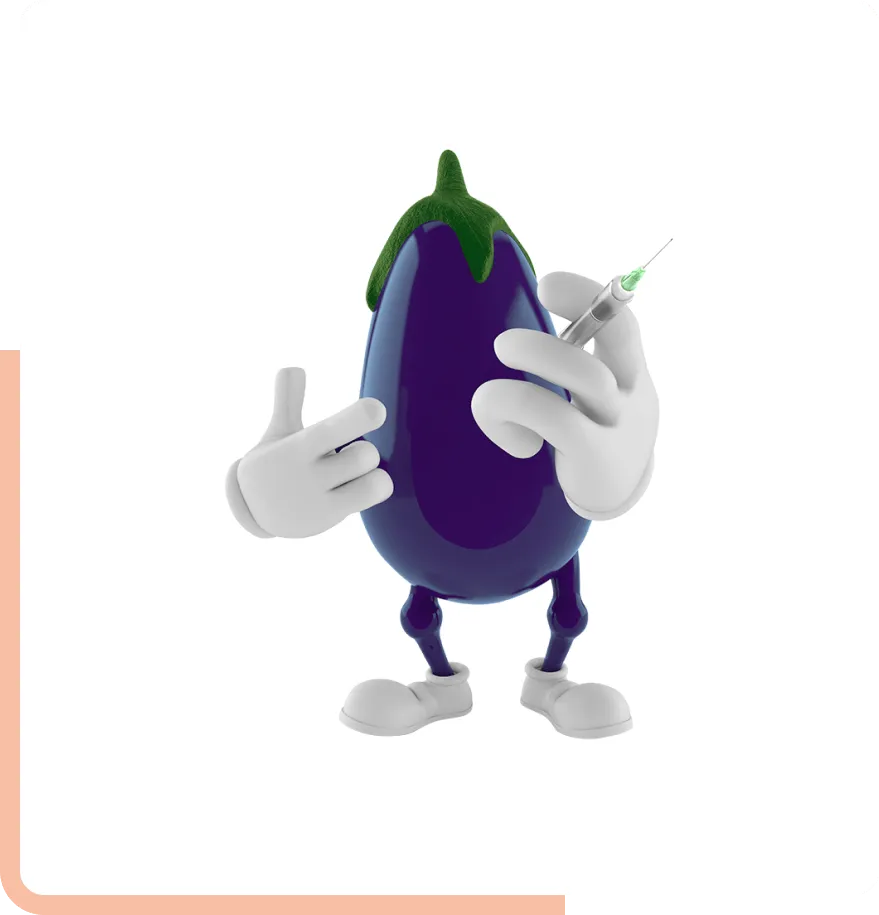
In 2011, Dr. Ana Carolina Puga developed the Eggplant Methodology to improve the hands-on injectables classes at NEPUGA. This approach arose from students' difficulties in planning precise injections in patients and achieving the desired results. The solution involved using the eggplant as a training surface to simulate various types of injections. This allowed students to develop dexterity, adjust plunger pressure according to the product and needle depth, and gain a steady hand in performing aesthetic procedures such as intradermotherapy, fillers and botulinum toxin. This stage is crucial for learning about biosafety, pharmacology and the handling of syringes and needles, as well as for practicing injection techniques and experimenting, making mistakes, learning and improving.
Exploring the Benefits of the Eggplant Methodology in Injectables Training
The eggplant is a vegetable with several layers, just like human skin. Although its outermost layer does not have the same hardness and resistance, since eggplant skin is thinner and more fragile, it has a thick, firm “flesh” that provides the resistance we need for training.
After some practical studies and observations, this active methodology was developed to make training easier for professionals preparing for clinical practice. With the Eggplant Methodology, students will develop greater dexterity in handling various types of syringes and needle sizes, simulating injections and practicing the most widely used injection techniques in aesthetic health.